Camera Glasses vs Action Camera for POV Filming: Which Format Fits the Job?
Choose by shooting context, not by a headline resolution claim. Camera glasses suit eye-level, hands-free capture with minimal setup; a dedicated action camera usually offers more mounting options, creative control and model-specific stabilisation features you should verify before you rely on them.
Eye-level convenience versus mount position and setup time
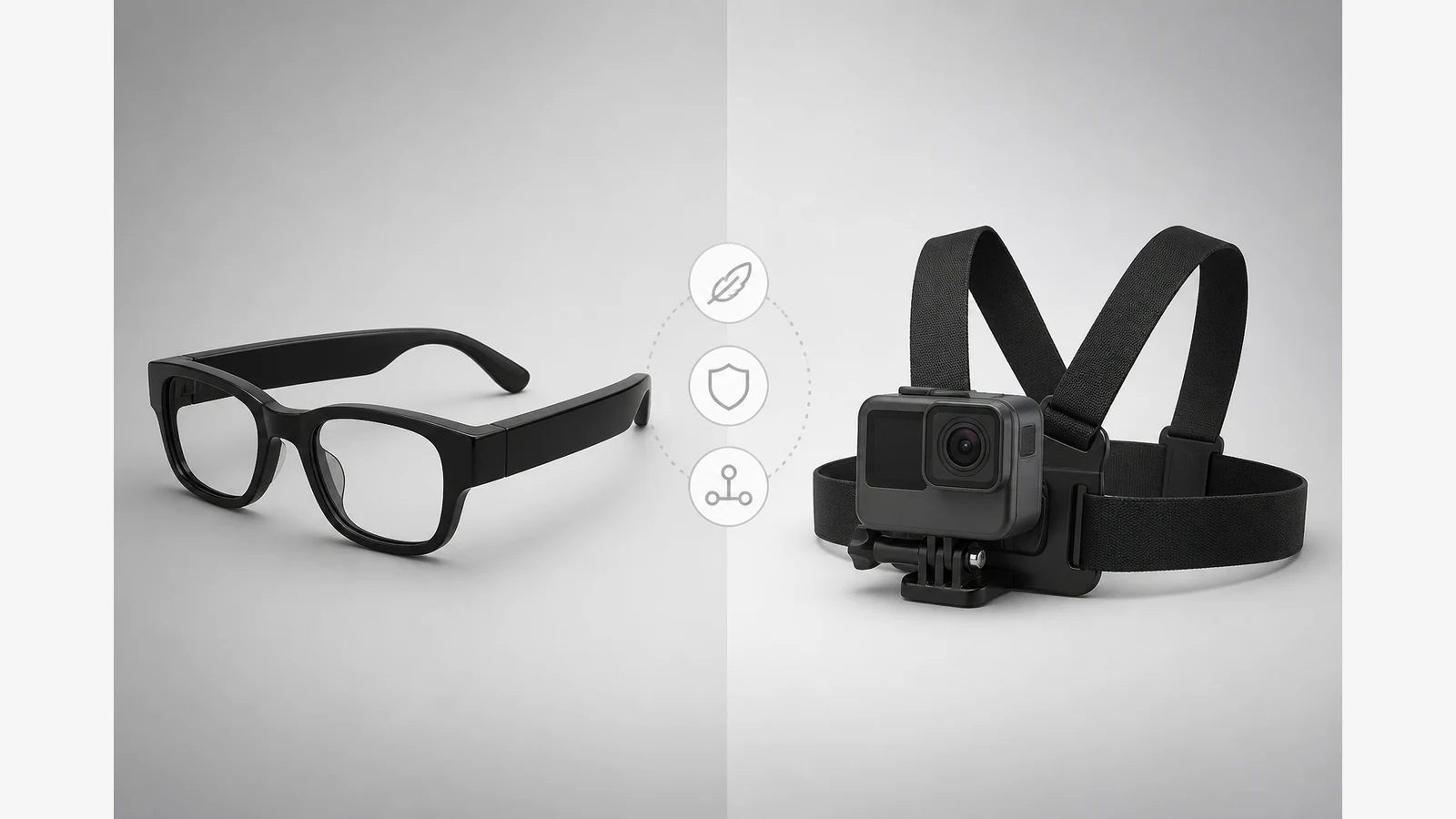
Camera glasses keep the lens roughly at eye height and leave both hands free. That helps when you need to cycle, demonstrate a task, walk a dog or keep tools in hand. An action camera can sit on a chest harness, helmet, handlebar, cage or tripod, so framing is a deliberate mounting decision rather than “wherever your eyes look”.
Setup time differs as well. Glasses are typically put on and used with the model’s controls. An action camera often needs a mount, orientation check and secure fastening before the take. Format guides published for POV filming in 2026 separate glasses for hands-free eye-level convenience from dedicated POV cameras with broader mounting and control options, which matches a format-first choice rather than a universal “best” device.
Stabilisation, framing, battery and weather checks to verify per model
Before you decide, treat every performance claim as model-specific and check the exact manual or manufacturer page:
- Stabilisation: confirm what the device actually offers; do not assume electronic or optical stabilisation from a category label.
- Framing: glasses follow your gaze; action cameras follow the mount. Decide which behaviour matches the scene.
- Battery and runtime: use only figures stated for your exact model; use confirmed details durations for planning.
- Weather and handling: if a water-resistance rating, operating temperature or case requirement is not published for your unit, do not assume outdoor durability.
Tiny wearable cameras, glasses and conventional action-camera formats are different tools. Comparing formats first is safer than chasing a single “best POV camera” list.
Decision table for casual POV, structured shoots and high-motion use
| Use case | Lean toward glasses | Lean toward an action camera |
|---|---|---|
| Casual eye-level POV | Quick on/off, hands free, low visual bulk | When you need a fixed frame away from your eyes |
| Structured multi-angle shoots | Only if one eye-level angle is enough | Multiple mounts, reframing and accessory control |
| High-motion or impact-prone scenes | Only if the model and fit are rated for that use | Often preferred when secure mounting and protective housings are required |
If neither format is a clear fit, a phone on a tripod or a dedicated camcorder may still be the calmer choice.
Privacy and secure-footage checklist before recording people
Portable cameras and camera glasses can capture bystanders without them noticing. UK Information Commissioner’s Office (ICO) guidance on action cameras and other portable surveillance technologies (currently noted as under review) asks users to secure devices and removable media, make recording apparent where possible, and edit or crop footage to reduce harm to others. Before you record:
- Decide whether recording is necessary and proportionate for the setting.
- Make recording apparent where you can, and respect venue or private-property rules.
- Secure the device, any removable media and transfer paths.
- Plan how you will store, share, redact or delete footage that includes other people.
This is practical hygiene, not legal advice or permission for covert recording. For UK privacy context on camera glasses, see the camera glasses UK privacy law guide.
Who should keep using a phone or dedicated camera
Keep a phone or dedicated camera when you need optical zoom, verified long runtimes, interchangeable lenses, controlled audio, or a fixed frame that must not move with your head. Next step: if eye-level hands-free capture is the job, review the current AIGLAS V1 smart glasses product page and confirm every control against the model manual before first use. Related reading: camera glasses first-day setup checklist and how long smart glasses can record video.
Are camera glasses always better for POV?
No. They favour eye-level convenience; action cameras often win on mounting flexibility and model-specific creative controls.
Can I rely on category “stabilisation” claims?
No. Verify stabilisation, battery and weather limits on the exact model documentation.
Do I need consent every time I film in public?
Rules depend on context. Follow ICO portable-camera guidance, venue policies and any applicable law; do not assume covert recording is allowed.