Digital Video Recorder Explained: A UK Buyer's Guide
A digital video recorder (DVR) is a device that records video footage in digital form, most commonly from analogue CCTV cameras, onto a hard drive for live viewing, playback and export. In the UK, a DVR is typically used in home and business security systems where existing coaxial cabling is already in place, making it a practical and cost-effective recording solution.
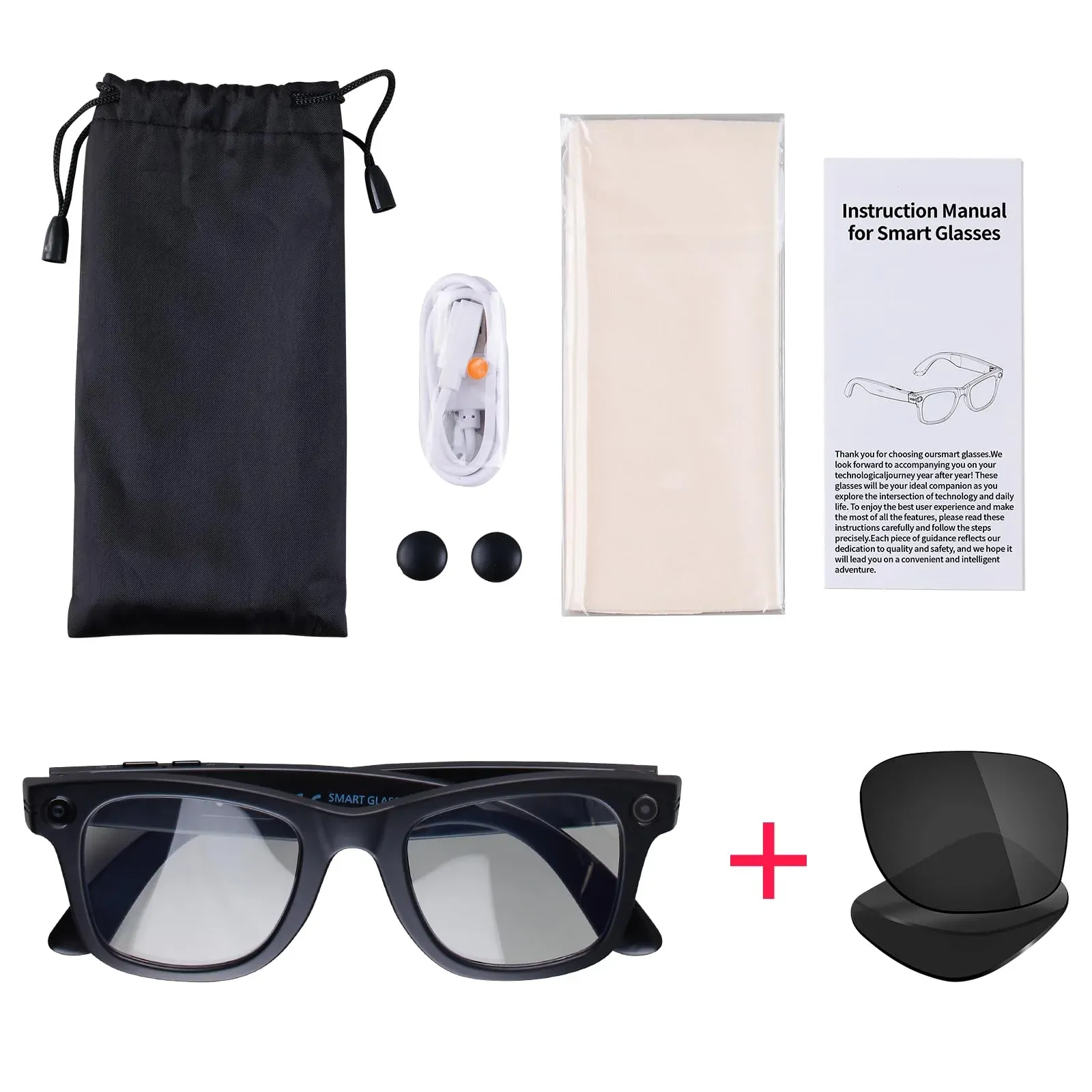
Not all video recorders are fixed to a wall. If you install, repair or inspect for a living, a fixed recorder cannot follow you up a ladder or into a loft — and a fixed camera never faces the socket, joint or junction box you are actually working on. For hands-free, first-person capture on site visits, a wearable option such as the AIGLAS V1 smart glasses records up to 90 minutes of 1080p footage at 42g—without coaxial cabling or a separate NVR box.
TL;DR: A digital video recorder converts camera footage into digital files for storage and playback. It is best suited to analogue or HD-over-coax CCTV systems, offers features such as motion recording and remote viewing, and remains a popular choice in the UK for upgrading older camera installations without full rewiring.
Key Takeaways
- Core function: A DVR converts analogue CCTV signals into digital video for recording, playback and backup.
- Best use case: It is ideal for UK properties with existing coaxial camera wiring.
- Modern compatibility: Many current DVRs support HD-TVI, AHD and H.265 compression for sharper footage and lower storage use.
- Legal compliance: Public-facing CCTV use must follow the Data Protection Act 2018 and UK GDPR.
- Typical storage: A 2TB drive may hold roughly two weeks of continuous footage from four 1080p cameras at 15fps (H.264), depending on settings and compression.
What is a digital video recorder?
A digital video recorder is an electronic device that records video in a digital format to an internal hard drive or other storage media. In CCTV systems, a DVR usually connects to analogue cameras through coaxial cables and acts as the central unit for recording, playback, export and remote access.
Unlike older VHS-based systems, a DVR lets users instantly search recordings, review incidents by date and time, set motion-based recording schedules and monitor cameras remotely through an app or web interface. As a result, it has become the standard upgrade path for many UK premises still using legacy camera cabling.
Importantly, modern “analogue” systems are often high definition. Many UK DVRs now support HD-TVI, CVI or AHD formats, enabling 1080p or even 4K video over traditional cabling. Therefore, a DVR can be a cost-effective way to improve image quality without replacing the whole infrastructure.
How does a digital video recorder work?
A DVR receives video signals from connected cameras, processes those signals into digital files, compresses them to save space and stores them on an internal surveillance-grade hard drive. It also manages playback controls, recording schedules and network access.
In practice, this means the recorder handles much of the processing rather than the camera itself. Consequently, analogue cameras can remain relatively simple while the DVR provides functions such as:
- continuous or motion-triggered recording
- search by date, time or event
- USB or network export of clips
- remote live view via smartphone
- alert notifications where supported
In practice, ease of use often depends less on headline resolution and more on app stability, playback speed and how clearly the menu system handles recording searches.
What is the difference between a DVR and an NVR?
A common question from UK buyers is whether they need a DVR or an NVR. The main difference is where the video gets processed. With a DVR, the recorder digitises footage from analogue cameras. With an NVR, IP cameras process the footage themselves before sending it over a network to the recorder.
A DVR is usually better when you already have coaxial cables installed and want to keep costs under control. By contrast, an NVR is often better for fully networked systems that need greater flexibility or expansion.
If you are comparing both options, think about your existing wiring first. In many British homes, shops and small commercial units with older cable runs, a modern HD-DVR remains the simplest upgrade route.
One honest boundary: neither a DVR nor an NVR helps a sole trader who needs to evidence their own workmanship. If a customer disputes what state a fuse board or bathroom was in before you started, only a recording made from your own point of view captures the original condition and each key step — footage you can attach to the job sheet before you leave. That is a wearable-recorder job, not a CCTV one.
The practical rule UK installers work to: the choice between a DVR and an NVR usually comes down to existing infrastructure. If your building is already wired with BNC/coaxial cables, a modern HD-DVR is the most logical and cost-effective upgrade path.
For more on network-based options, see The Ultimate Guide to Network Video Recorder in the UK.
What are the main features to look for in a digital video recorder?
If you are choosing a digital video recorder in the UK, several features make a meaningful difference to performance and long-term value. Although budget matters, storage efficiency, image fluidity and remote usability often have more impact day to day.
Does H.265 matter on a DVR?
Yes. H.265 compression can reduce storage use significantly compared with older H.264 systems while maintaining similar image quality. As a result, you may retain more days of footage on the same hard drive capacity.
This matters in the UK where many businesses want longer retention periods for incident review or insurance purposes. Across typical small-site deployments, H.265-capable units generally offer better value over time because they delay the need for larger drives.
How many frames per second do you need?
Frames per second (fps) affects how smooth recorded movement looks. For basic monitoring, 12 to 15fps may be acceptable. However, if you need clearer capture of moving people or vehicles, especially around entrances or roadsides, higher frame rates are preferable.
In UK PAL-based systems, 25fps is commonly referred to as real-time recording. Therefore, if evidential clarity matters more than maximising retention days alone, prioritise stronger fps performance on key channels.
Can you view a DVR remotely?
Most modern DVRs include remote access through Ethernet connection to your broadband router from providers such as BT, Sky or Virgin Media. This allows live viewing and playback through iOS or Android apps.
However, app quality varies considerably between brands. So before buying, check whether software updates are regular and whether remote playback works reliably over mobile data as well as home Wi-Fi.
How many channels should a DVR have?
DVRs are commonly available in 4-channel, 8-channel and 16-channel models. A 4-channel unit suits many flats or smaller homes; meanwhile an 8-channel model leaves room for future camera additions at detached houses or small business sites.
How much storage does a digital video recorder need?
The storage required depends on camera count, resolution, frame rate, compression type and how long you want to keep footage. This is one of the most important buying decisions because insufficient storage leads to shorter retention times than expected.
For example:
- a single 1080p camera at 15fps using H.264 may require around 30GB per day
- four such cameras may use about 120GB per day
- a 2TB drive could provide roughly 16 days of continuous storage under those settings
- switching to H.265 can extend retention substantially on the same capacity
In addition, using motion detection instead of continuous recording can greatly reduce storage use where scenes are quiet overnight or outside trading hours.
Frequently Asked Questions
What is the difference between a DVR and smart glasses with a camera?
A DVR records fixed CCTV camera feeds to a hard drive. Smart glasses such as AIGLAS V1 are wearable personal recorders that capture a first-person 1080p view hands-free—ideal for tradespeople who need both hands on tools while documenting a job, rather than monitoring a static premises.
Can I use a DVR for personal wearable recording?
No. DVRs are designed for wired camera systems. For personal POV capture in the UK, consider a wearable HD personal video recorder or smart glasses instead.
Is CCTV DVR footage admissible in UK disputes?
Properly configured CCTV with clear signage may support insurance or workplace claims, subject to GDPR and ICO guidance. Personal wearable footage has separate consent rules—always check ICO guidance before recording in public or shared spaces.
Need hands-free recording instead of a fixed CCTV DVR?
AIGLAS V1 smart glasses capture 1080p from your point of view—free UK delivery & 30-day returns.
Shop AIGLAS V1 Smart Glasses — £124.50