Flying With Smart Glasses From Uk Airports
Treat smart glasses as a lithium-powered portable electronic device, protect them from damage and accidental activation, and check your operating airline’s current rules before you fly. Airline and airport rules can change, and carriers may be stricter than general Civil Aviation Authority (CAA) guidance. This article is informational only and was prepared with public guidance current as of 10 August 2026 — always re-check before departure.
Installed versus spare batteries and Watt-hour ratings
Most consumer smart glasses use an installed rechargeable battery. Find the Watt-hour (Wh) rating on the device, packaging or manual where airlines or security ask for it. Use confirmed details a Wh value. If you also carry spare lithium batteries or a power bank, those usually face stricter cabin-only rules. Electrical Safety First recommends checking current airline rules before travel with portable batteries.
Protect the device from damage and accidental activation
CAA safety advice on what to pack treats lithium-powered portable electronics as restricted baggage items: devices must be protected from damage and accidental activation, with airline-specific restrictions checked before travel. British Airways states that battery-powered personal electronics must be protected from accidental activation, rejects damaged batteries or equipment, requires checked devices to be completely switched off, and keeps spare batteries in the cabin.
- Power the glasses off for transit if the manual and airline instructions allow or require it.
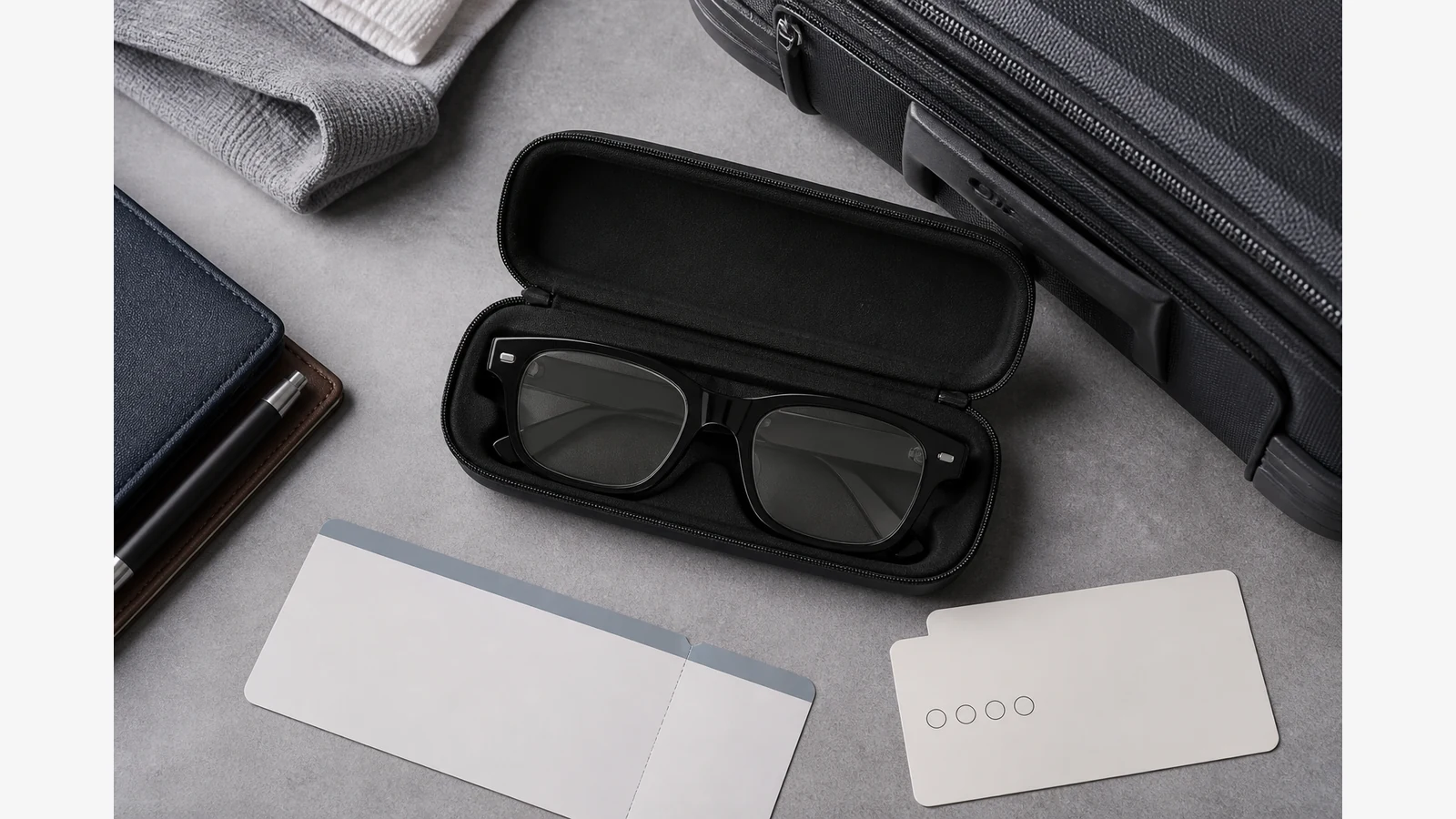
- Use a hard protective case so controls are not pressed in a packed bag.
- Do not pack damaged, swollen or recalled battery equipment.
- Keep spare cells or power banks in hand luggage when rules require it.
Cabin versus checked-bag decision table
| Item | Typical CAA / airline pattern to verify | Your action |
|---|---|---|
| Smart glasses with installed battery | Often allowed in cabin; checked carriage may require power-off and protection | Confirm with your airline; prefer cabin when unsure |
| Spare lithium batteries / power banks | Commonly cabin only; not in checked holds | Carry in hand luggage; protect terminals |
| Damaged battery equipment | Often refused | Do not travel with it; seek disposal advice |
These rows are decision prompts, not guarantees. Your ticketed carrier’s restricted-items page is the rule that applies to your flight.
Security, destination and venue checks for a camera-equipped wearable
Expect screening questions about electronic devices. At the destination, venues, museums, workplaces and private properties may restrict camera wearables regardless of airline rules. Do not record inside security areas or anywhere recording is prohibited. For privacy and filming boundaries in the UK, see the camera glasses UK privacy law guide.
Pre-departure checklist
- Read your airline’s restricted-items page for lithium batteries and personal electronics.
- Note any Wh rating printed for your exact model; do not guess.
- Charge and inspect the device at home before travel day; leave damaged gear behind.
- Pack glasses in a protective case in carry-on unless the airline instructs otherwise.
- Disable accidental activation and keep spare batteries in the cabin when required.
- Re-check destination venue rules for camera glasses.
Next step: review product care details on the AIGLAS V1 smart glasses page, then follow the model manual for power-off and packing. Related: charging safety guide and privacy questions before gifting smart glasses.
Can smart glasses go in checked baggage?
Some airlines allow powered-off, protected devices in checked bags, but rules vary. Confirm with your airline; cabin carriage is often simpler.
Do I need to declare Watt-hours?
Declare or show the rating if asked. Use only the value printed for your device; use confirmed details one.
Are airport rules the same as airline rules?
Not always. Follow both security instructions and your operating airline’s restricted-items policy.